Saturday, March 8, 2014

Black Magic and the Worcesterite

By David "Chet" Williamson Sneade


On paper it was an improbable pairing. Milton Meltzer, a white Jewish kid from Worcester and Langston Hughes, a black American from Joplin, Missouri.

The force that bonded the two men was their love of writing. Together, they produced a classic. The book is called Black Magic: A Pictorial History of the Negro in American Entertainment.


Hughes needs no introduction. The legendary writer was a key figure of the Harlem Renaissance. His poem, “A Dream Deferred” is recited by school children everywhere.

See: http://www.biography.com/people/langston-hughes-9346313

Meltzer was born here on May 8, 1915. He died in New York City on September 19, 2009. In his lifetime, he was a prolific writer who wrote more than 90 titles, including critically-acclaimed biographies such as those of Benjamin Franklin, Thomas Jefferson, Thomas Paine, Mark Twain, Henry David Thoreau, Betty Friedan, Mary McLoud Bethune, and Dorothea Lange, among others.

He was a five-time finalist for a National Book Award and has been honored with the Christopher, Olive Branch and Jefferson Cup. In 2001, Meltzer won the Laura Ingalls Wilder Award for his contribution to children’s literature.

Of his Worcester experience, he has documented that as well in a memoir titled, Starting From Home: A Writer’s Beginnings. The book jacket reads: “Where does a life begin? For renowned author Milton Meltzer, this question starts a search through personal, family, and American history. His memoir opens in the small villages of Eastern Europe, continues in the sweat-shops of New York’s teeming Lower East Side, moves to Worcester, Massachusetts, where Meltzer was born in 1915, and ends at the gates of Columbia University as he enters college. He recounts the discoveries, hardships, and triumphs of childhood, at a time when the country was changing as rapidly as he was.”


Meltzer grew up on Vernon Hill at 2 Chapin Street, not far from Worcester Academy. He went to Union Hill School as a child and Classical High School as a teenager. Here’s the author describing a trip to Water Street: “It was the main shopping center for the Jewish community. Once an Irish neighborhood, it had turned largely Jewish by my time. Only a few blocks long, it was a jumble of brick buildings were tenements and stores below – small stores, hot in summer and cold in winter.

I walked the mile or so to Water Street on an occasional Sunday morning, bearing my mother's shopping list. You could buy some of the things closer to home but, for equality, everyone considered the Water Street stores the best: Whitman’s creamery, Weintraub’s delicatessen, Arkus’ pharmacy.”

Meltzer recalls a little newsstand owned by a Mr. Apelbaum, “the only place in town to buy the Yiddish newspapers. The Forward, or Forvitz as they called it, was the socialist paper and the most popular and influential. Then there was the Tag, the Journal, the Tageblatt, and even the Freiheit, a Communist paper. My father asked for the Tag now and then.”


Classical High School 
The writer also notes with pride and empathy that “Mr. Apelbaum trudged over to Union Station each morning to pick up the papers from the New York train, and carry them to his store by wagon or sled. He handled special orders too: getting any Jewish books you wanted from New York, or sheet music, or tickets to the Jewish shows that came to town.”


Meltzer attended Columbia – as did Hughes (1922) – from 1932 to 1936. He dropped out of school before graduation after his father died of cancer. His dream of becoming a writer became a reality upon securing assignments for the Works Project Administration during the Depression.

In addition to its writing, what makes Black Magic a classic is its content. The research reaches deep and is told in that indelible folksy, clear-eyed, direct style that made Hughes so endearing.

In his book, Socialist Joy in the Writing of Langston Hughes, Jonathan Scott wrote: “Black Magic is a breathtaking account of the origins of virtually every African-American popular art form, from major components such as hand-clapping, feet-stomping, stick-dancing, and drum-beating rhythms all of the 18th and 19th centuries, as well as the spirituals and folk culture, to constitutive elements such as homemade banjos and drums and a list of the first African-American radio commentators and newscasters. The text is filled with a stunning array of esoterica – the stuff of any lasting book on popular culture – but has, unfortunately, been completely ignored in U.S. “cultural studies” projects.”

Singling out the chapter, “Just About Everything,” Scott says that Hughes and Meltzer provide a fascinating history of the first African-American exhibits in PT Barnum's traveling circus. Barnum's first set of Siamese twins -- the 14-year-old Carolina twins Millie and Christina – is discussed, along with Barnum’s first “Fat Ladies” – who were actually blues singers looking for steady work -- Big Mabel and Beulah Bryant. There is also a story about Barnum's first Giants, one of them was an African American Civil War veteran name Admiral Dot. Admiral Dot stood 7 feet 11 inches tall and weighed six hundred pounds, the text is accompanied by a rare daguerreotype of him.”

Admiral Dot
Bricktop
The chapter also presents historic briefs on forgotten pioneers, as Scott writes, “such as the world's most beloved nightclub hostess, Ada “Bricktop” Smith du Conge. Made into a celebrity in Paris during the early 1920s with the help of Louis Aragon, Bricktop ran the most popular nightclub in Paris for nearly 20 years. In addition to the brief history of individual pathfinders, there is a brief history of institutions, such as the Lincoln Theater in Harlem, the Lafayette Players, and the American Negro Theater, which began in the basement of the New York Public Library. But perhaps the most delightful and useful aspect of the book is, not surprisingly, the graphics. Mixed throughout the text are play bills, posters, signed photograph, advertisements, real photographs of artist at work, newspaper clippings, drawings, and diagrams.”

Inez Clough, from Worcester

In the 1990 edition of the book, Ossie Davis wrote a new forward. This is what he wrote about Hughes: “Langston Hughes was not only a poet laureate, but also recording secretary to the tribe. Nothing about us, past or present was too small or trivial for him to notice, hand down, or pass on as poem, story, or history book – certainly not our arts, our singing and dancing, which might be merely entertainment to White America, but to us were matters of life and death. Langston considered it his job to keep the tribe together, and Black Magic is one of the books in which he hid the evidence of who we really are. Langston reminds us that our singing, our dancing, our music, our humor, our stories our “entertainment” – spirituals, jazz, blues, rap – was, and is all too often, the one place where we have a chance to set standards and make definitions … .”

Speaking of Meltzer and Hughes, Davis said: “Reading this book again was more than a joy, it was a re-education. But it was only after I had sat back and feasted, savoring everything that the authors provided – Milton Meltzer’s inspired compilation of sketches, photos, playbills, reviews, and snapshots, and Langston’s honey-colored voice telling this multi-colored story – that it dawned on me: Black Magic is not only about our art, it is itself a prime example of that art in action … Yes, it’s a wonderful work, a ‘good read,’ this Black Magic, still uplifting the human spirit. Milton’s carefully researched pictures, sassy as ever, still dance before the gladdened and thankful eye; the old theatrical handbills and posters, still magic, play their evocative tricks; the words being Langston’s, cannot help being poetry. I’ll just bet that someday somebody’s going to take this book and set it to music!”

Bolden, top row, second from left, holding cornet

In the chapter titled “Birth of Jazz,” the authors write: “When Buddy Bolden’s horn sounded in old New Orleans, it sounded so loud it could be heard all the way from Canal Street downtown to Lake Pontchartrain. Louis [Armstrong] was a child then, but he determined to blow a horn like Bolden, and he did. His trumpet has since been heard around the world.”

Providing historic overview, Hughes and Meltzer write: “From old New Orleans, the city of the Mardi Gras and the marching bands, came many great jazz players and composers – Jelly Roll Morton, the pianist who wrote ‘Tiger Rag,’ trumpeter King Oliver, trombonist Kid Ory, clarinetists Barney Bigard and Sidney Bechet, and banjo-playing Johnny St. Cyr. Farther up the Mississippi in Sedalia, Missouri, Scott Joplin was beating out his ‘Maple Leaf Rag,’ in 1899. In Memphis and St. Louis W.C. Handy was dreaming the blues. On riverboats, in carnivals and circuses, with minstrels, on the vaudeville stage and in nightclubs many of the early jazz musicians became popular solo entertainers or featured performers in show bands; Joe Oliver’s musical clowns, for instance, took San Francisco by storm in 1921, but later became the more elegant Creole Band in tuxedos and diamonds.”

Writer Jonathan Scott reported that Hughes had collaborated with other artists and writers in the past, most notably with photographer Roy DeCara on the photo essay, The Sweet Flypaper of Life (1955). Scott also pointed out that Hughes and Meltzer worked together on a previous project called A Pictorial History of the Negro in America (1956).


Melzter served in the Army in World War II, and afterward was hired as a writer at CBS. He also worked as a public relations executive for a pharmaceutical company. In conceiving the pictorial histories, Meltzer felt, as New York Times writer Dennis Hevesi explains, “a book about blacks in America was a worthwhile project and could attract readers, he decided, especially if it was full of photos. While traveling the country for the drug company, he did research at historical societies, local archives and museums and collected nearly 1,000 illustrations ….”

Hevesi also noted that Meltzer needed a black co-author for the project and a mutual acquaintance introduced him to Hughes.

Hughes in Harlem
Finding a publisher for a pictorial history proved extremely frustrating for Hughes and Meltzer, as more than ten firms turned on a project,” Scott wrote. “According to Meltzer, ‘Two or three even said that blacks don't read, so why bother with them? And a few suggested going to a foundation, since no normal publisher to take on such a pointless task ....

In the mid-1960's Hughes worked again with Meltzer, producing Black Magic: A Pictorial History of the Negro in American Entertainment (1967) -- arguably the most comprehensive history of African American popular culture ever published.”

Black Magic was published in 1967 and remained in print until the 1990s. It would be Hughes’ last. Meltzer said his book originally would have no dedication. “The authors felt there were so many distinguished people in the world of entertainment it would be impossible to select any one man or woman to pay tribute to.” But on May 22, 1967, shortly after Black Magic was completed, Langston Hughes died. In his dedication, Meltzer wrote: “I think, now, that the artists who played and sang and danced in the many works he created for them, and the audiences to whom he gave such joy, would want to see the book dedicated To Langston, with love, Milton Meltzer.”

Meltzer died in New York City in 2009. He was 94.

Note: This is a work in progress. Comments, corrections, and suggestions are always welcome at: walnutharmonicas@gmail.com. Also see:www.worcestersongs.blogspot.com
Thank you.

Resources


Saturday, March 1, 2014

Melody and Madness

By David "Chet" Williamson Sneade

Among his many claims to fame – and more than a few of infamy -- Worcester’s Robert Benchley was a card-carrying member of the fabled Algonquin Round Table. 

This coveted perch literally gave him a seat – along with a select group of authors, humorists, critics, wits, and other raconteurs – at the table of the best and brightest of his generation, known as the Jazz Age.

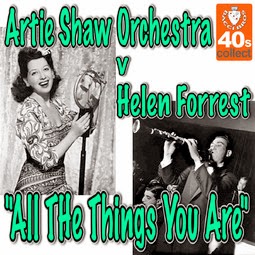
Artie Shaw was quite simply one of finest jazz clarinetists ever to play the instrument. This post is a snapshot of the time when these two historic characters worked together on a nationally syndicated radio show called, "Melody and Madness."


The time frame is the winter of 1938 into the following snows of ‘39. In addition to Benchley and Shaw, the show starred vocalists Helen Forrest, Richard Todd, and the Four Clubmen. It premiered at 10 p.m. on Sunday, November 20, 1938 on CBS and was sponsored by Old Gold cigarettes.


According to On the Air: The Encyclopedia of Old Time Radio by John Denning, this musical variety show was first designed as a “vehicle for Robert Benchley, nationally known as a cerebral comic, who was much ballyhooed in this his first radio series.” At the time of the broadcast, Benchley already had more than 40 short films to his credit and been a columnist at The New Yorker for more than a decade. And more importantly, he was widely recognized as one of America’s best-known humorists.

In her book, Flappers: A Guide to an American Subculture by Kelly Boyer Sagert, the author offers this portrait of Benchley: Born on September 15, 1889, in Worcester, Massachusetts, to Charles and Maria Jean (Morin) Benchley, Robert did not recall a happy childhood, remembering bee stings, feelings of terror during 4th of July fireworks, and more …. In 1898 tragedy struck the Benchley family as Robert’s older brother, Edmond, died in action in the Spanish-American War."
Harvard grad, Benchley

Benchley attended South High School from 1904 through 1907 before transferring to Phillips Exeter Academy, "thanks to the influence and funding of the woman who had been Edmond’s fiance, Lillian Duryea," Sagert said. "At this academy, Benchley joined the drama club, acting in plays, and he created illustrations for its publications. Duryea then helped Benchley to get accepted to Harvard University, where he served as editor of the Harvard Lampoon. During his senior year, he wrote a daily column at the Boston Journal.

Moving to New York, Benchley began participating in the Algonquin Round Table, and working for Vanity Fair, Life, and The New Yorker; he wrote drama columns for The New Yorker through January 1940. In 1935, a short-film How to Sleep, won an Academy Award for best short subject. In November 1938 he and bandleader Artie Shaw begin their radio show, Melody and Madness, on CBS Old Gold program which lasted 3 years. Benchley also guest starred on other radio programs including Bing Crosby’s show. Benchley's most famous quote may be “It took me 15 years to discover I had no talent for writing, but I couldn't give it up because by that time I was too famous.”
Benchley roaring

In describing Benchley's comic appeal and popularity, Tracy Chevalier, author of The Girl with the Pearl Earring said, “This comic representation of himself as a bumbling, insecure, somewhat neurotic, middle-class American male challenged to comprehend, cope with the rapid social and technological changes of his time was central to his popular appeal, as both a writer and a performer.”

Like Benchley, Shaw was also courted for “Melody and Madness.” In his book, Artie Shaw, King of the Clarinet: His Life and Times, author Tom Nolan reports that when the producers of “Melody and Madness” first came calling, the bandleader was booked into the Blue Room in the Hotel Lincoln in St. Louis from October to January of 1938. Shaw’s manager at the time was Joe Shribman, a Boston-based promoter, who along with his brother Charlie, booked a variety of showcases and ballrooms throughout New England, including Sun Valley in Northboro.

Artie Shaw and licorice stick

He hadn’t been there more than a month, Shribman said of the clarinetist, “when he got one of the biggest plums in the business: The Old Gold radio show. And they came looking for Shaw.” Nolan noted that Old Gold had sponsored big bands in the past, most notably, orchestra leader Paul Whiteman. Now they were organizing a new show where Benchley would provide the madness and Shaw the melodies.

Denning describes the show as having a fairly basic format where Benchley would do three monologues, and Shaw would then play three song selections. “That was the weekly format of ‘Melody and Madness,’” he said, “but the show caught the Shaw band on the upswing, perhaps two pieces short of greatness. When Shaw hired Georgie Auld on reeds and Buddy Rich on drums in December of 1938, the orchestra bloomed into a swing giant. The band burst into 1939 with a free and happy sound: heighten by the trumpet of Bernie Privin, the trombone of George Arus, Shaw’s clarinet and the vocals of Helen Forrest it captured its moment as vividly as a photograph.”

Shaw may have been a meteor, but Benchley’s star was also shining brightly in the firmament. In his column, "The New York Radio Studios," Jack Sher wrote, "Once in awhile someone in a studio audience will throw a fit of a hysterics because of something a comedian says. It doesn't happen often enough, according to some comedians, but when it does the results are sometimes disastrous. Recently at Robert Benchley's 'Melody and Madness' show, a woman went into gales of uncontrollable laughter because of one of the gags in Robert’s 'Bounding Broomstick Skit.' She just couldn't stop laughing. 

"When the program was over and the last fanfare had died way she was still laughing. Only a strong solution of spirit of ammonia brought her around. The CBS house manager was upset, Benchley was quite unperturbed. 'She probably just caught on to one of a Fred Allen's gags,' he said."

As far as interaction between Benchley and Shaw, in her book, Robert Benchley: His Life and Good Times, Babette Rosmond shares this: Benchley didn’t write his own material, but he was himself; so it was a funny show. He had his own little mock company for five-minute skits and the orchestra was led by young Artie Shaw, who was very much the radical in those days. 

In fact, Artie Shaw would try to get Benchley to discuss Marxist economic systems, realizing that Benchley was an Establishment Intellectual. ‘I can’t even keep my check book balanced,’ Robert would say kindly.”

On paper, the pairing of Benchley and Shaw was a perfect match. The reality is that it was doomed from the start. A few uncomfortable social circumstances along with Shaw’s disposition and attitude about popular music helped end it.

First, Billie Holiday, the singer in the band, was black and according to numerous sources, Shaw was forced to ask her to leave the band because of the color of her skin. It was reported that neither the sponsor nor the network wanted any controversy – typical Jim Crow-segregationist practices of the time. Singer Helen Forrest, who got the gig, says, “A lot of people including [Art’s] manager, booking agents, and producers, put pressure on him not to use [Billie], and [Shaw] used her less and less as time went on. He had it in his mind to do right by her, but his skull was caving in from the pressure.”


Shaw and Holiday
Shaw claims there were other factors which led to the decision not to hire Holiday. “She quit because some guys got a hold of her and promised her the sun, the moon and the stars,” Shaw said. “And by that time she was becoming well known. My band just got over, and pow! – we were stars; and so she was a star, right away. And people got their hooks into her, and they wanted her to do a single.”

According to Nolan, Holiday never blamed Shaw for the situation. He quotes the singer saying, “There aren’t many people who fought harder than Artie against the vicious people in the music business or the crummy side of second-class citizenship which eats at the guts of so many musicians. He didn’t win. But he didn’t lose either.”

Another consideration for Shaw’s departure was his health. Author John White wrote: “The physical strains of an exhausting schedule also took their toll. In addition to recordings, personal appearances, and broadcasts from the Lincoln Hotel, Shaw was musical master of ceremonies on the CBS ‘Melodies and Madness’ program, sponsored by Old Gold cigarettes. In the spring of 1939, the Shaw band opened at the Palomar Ballroom in Hollywood – where, four years earlier, the Goodman orchestra had made its sensational breakthrough. 

"On the opening night, Shaw – who was already suffering from a sore throat collapsed on the bandstand and was rushed to the hospital. Unconscious for five days with a form of leukemia, diagnosed as leucopenia or agranulocytosis, with a temperature of 105 degrees, he was not expected to live. Confounding medical opinion, he made a slow recovery and remembers that on first gaining consciousness, he saw his friend, singer/actress Judy Garland, sitting at his bedside.”

The other reason for Shaw’s departure from “Melody and Madness,” was his public announcement that he did not particular like playing popular music. Back in New York, he made a miraculous recovery from his illness and returned to the bandstand. 

According to Nolan, in early fall of ‘39, Shaw began receiving a great deal of negative publicity for criticism of the “jitterbug generation.” And as it happened, Old Gold used the phrase: “Modern as a ‘jitterbug” to pitch its Double-Mellow cigarettes aimed at young consumers.

The September 26, 1939 issue of the New York Post read: "Band Leader THINKS."
In an interview with Post columnist Michael Mok, Shaw announced: ‘I hate the music business. I’m not interested in giving people what they want. I’m interested in making music.” Nolan says that following complaints from outraged fans, the cigarette company canceled its sponsorship of Shaw’s radio show.

Publicly speaking, Shaw said he was okay with the decision. “The show was built all wrong for me,’ he told Metronome. Besides, it was on a weak network, thus killing its rating … . When I asked for a one-week vacation because I was so tired, and they wouldn’t give it to me unless I quit the show entirely, I quit the show entirely.” Nolan says Old Gold and its ad agency had a different take: “He asked for a week’s rest, so we gave him seven.”

George T. Simon, who also interviewed Shaw, shortly after the Post comments. “I don’t like jitterbugs,” Shaw said. “I don’t like the business angles connected with music. I can’t see autograph hunters. I thought the Old Gold program was lousy for my music. Frankly, I’m unhappy about the music business. Maybe I don’t belong in it. I like music – love it and live it, in fact – but for me the business part plain stinks.’”

The interview turned out to be prophetic. On November 18, 1939, while in performance at the Cafe Rouge in the Pennsylvania Hotel, Shaw did just that; he quit the business. Although it was short-lived, the bandleader would eventually leave his music business for good at the height of his career. “I walked off the bandstand, went up to my room, called my lawyer and told him I was leaving,” Shaw said.

Shaw was born Arthur Jacob Arshawsky on May 23, 1910. He died in Thousand Oaks, CA on December 30, 2004. For more on his life and times, see: http://www.biography.com/people/artie-shaw-9480862


Benchley died in New York on November 21, 1945. For more, see: http://www.robertbenchley.org/sob/

For sound samples of the “Melody and Madness, see: – http://www.emusic.com/album/artie-shaw/old-gold-melody-madness-shows/11028576/


Here’s a clip of Shaw playing his theme song “Nightmare” from the show – http://www.youtube.com/watch?v=ngY85zMjsgA

Here’s a clip of Shaw with Helen Forrest singing Worcester songwriter Charlie Tobias’ “Comes Love” – http://www.youtube.com/watch?v=M8JoCSoOcPM

Note: This is a work in progress. Comments, corrections, and suggestions are always welcome at: walnutharmonicas@gmail.com.  Also see: www.worcestersongs.blogspot.com
Thank you.

Resources


Sunday, February 23, 2014

Maximus Man, Sun Ra, and Klactoveesedstene

By David "Chet" Williamson Sneade 


There has been an ocean of words written by and about poet Charles Olson. Here are a few hundred more water spots, scribbles, and ink stains. The specific focus of this piece is the influence jazz had on both his writing and reading style.

Born in Worcester in 1910, Olson is considered a giant (literally and figuratively – he was six feet, eight inches tall) among American poets. The man who is said to have coined the expression, “post-modern,” Olson is recognized as a second generation modernist who reaches back to seminal, first generation poets such as Ezra Pound, William Carlos Williams, and T.S. Eliot. His work extends forward to reach deep into the new American poetry of the last half of the 20th century as well.


According to Poets.org, Olson was the son of Karl Joseph Olson – who was a postman in the city -- and Mary Hines. Charles Olson received his BA and MA from Wesleyan University before teaching English at Clark University. Two years later, he entered Harvard University in 1936, where he completed coursework for a PhD in American civilization.

By the age of twenty-nine, he had received his first Guggenheim fellowship for his studies of Herman Melville,” the site reported. “Rather than pursuing an academic career, Olson became active in depression-era politics. He served as the assistant chief of the foreign language section of the Office of War Information (OWI).”

Student Olson
Disillusioned over an issue of censorship, Olson quit the organization in 1944 to dedicate his life to writing. In 1945, he moved to Key West, Florida and did just that. In 1950, he published his influential essay, "Projective Verse." “Among other things,” Poets.org points out, “the essay posited that poetry should embody the rhythms of natural breath and thought.”

Olson's ideas on poetics – especially those of “projective verse” -- had a profound influence on a generation of poets, including Denise Levertov, Paul Blackburn, Ed Dorn, Jonathan Williams, Robert Duncan and Leroi Jones, among others.

First written in 1950, it was later published by Amira Baraka (Leroi Jones) as a pamphlet for Totem Press in 1959, Projective Verse is literally Olson’s revolutionary manifesto on how to do poetry in the post-modern world.

In a reading at the Fourth Annual Charles Olson Memorial Lecture at the Cape Ann Museum in Gloucester in 2013, Baraka read a piece called, “Charles Olson and Sun Ra – A Note on Being Out.” “If you cannot make the connection that is between Olson and Sun Ra, you cannot understand the topology of that time,” he said. “This essay changed the direction of many young poets writing in the U.S. in the ‘50s and ‘60s. Olson urges the poet to stop using the closed forms of the formal U.S. verse … particularly, stop using the dead inherited detritus of the English poetry – that a new American poetry must be built on the ear, the breath, the sound of the poet. It would be composition by feel, rather than overused inherited, largely academic, usually iambic form.”

Baraka


In 1950, the year that Olson writes Projective Verse, Herman “Sonny” Blount changes his name to Sun Ra, after the ancient Egyptian sun god. Speaking of Ra and his mystical, magic music, Baraka says, “The parallel that tie Olson and Ra -- they both exert great influence over American art during the ‘50s until this day.”


Sun Ra, looking radiant 
Herman "Sonny" Blount, AKA Sun RA

Very much inspired by jazz and the bebop that he listened in the 1940s, Olson was once asked to describe the poetic theory. “Boy, there was no poetic,” he cracked. “It was Charlie Parker. Literally, it was Charlie Parker.”

Still, in Projective Verse, he spells it out: “First, some simplicities that a man learns, if he works in OPEN, or what can also be called COMPOSITION BY FIELD, as opposed to inherited line, stanza, over-all form, what is the “old” base of the non-projective.”

Riffing more deeply, Olson explains, “Then the poem itself must, at all points, be a high-energy construct and, at all points, an energy-discharge.” He then states, the essential principle of projective verse. It is this: FORM IS NEVER MORE THAN AN EXTENSION OF CONTENT.”

In 1951, Olson was hired to teach at the progressively minded, Black Mountain College, North Carolina. Poet Robert Creeley, who would become a life-long friend of Olson’s, was a student at the school.

Robert Creeley
Olson credits Robert Creeley with giving him the line of: “Form is never more than an extension of content.” In an interview with the Poetry Foundation, Creeley explained Olson’s projective voice stating: “What he is trying to say is that the heart is a basic instance not only of rhythm, but it is the base of the measure of rhythms for all men in the way heartbeat is like the metronome in their whole system.

So that when [Olson] says the heart by way of the breath to the line, he is trying to say that it is in the line that the basic rhythmic scoring takes place. . . . Now, the head, the intelligence by way of the ear to the syllable – which he calls also 'the king and pin'— is the unit upon which all builds. The heart, then, stands, as the primary feeling term. The head, in contrast, is discriminating. It is discriminating by way of what it hears."

Creeley, who was born in Arlington and raised in Acton, MA, dropped out of Harvard and began hanging out in Boston jazz clubs like the Hi-Hat to listen to musicians, who would become the major influence on his poetry. He would later release two albums on the ECM label with jazz bassist Steve Swallow, Home and So There.

In his book, The Culture of Spontaneity: Improvisation and Arts in Post War America, author Daniel Belgrad states: “In 1950, Robert Creeley wrote Charles Olson a letter pointing out the correlations between Olson’s projective first essay in modern jazz. Creeley wrote that Charlie Parker, Max Roach, Miles Davis, and Bud Powell were undertaking extensions of form analogous to those that Olson was proposing in verse.

In particular, he singled out bebop’s sensitivity to rhythm and tone: ‘Some notes on the thing about the project verse … Two things we have yet to pick up on, with the head: a feel for timing, a feel for SOUND.’ Creeley praised bebop as embodying a counter-cultural sensibility, calling it an example, of ‘what timing variation, and sound-sense can complete … a precise example of a consciousness necessary.’”

Charlie Parker and Miles Davis


In an interview conducted by Chris Funkhauser, the writer asked pianist Cecil Taylor, when he engages with poetry, if he was influenced by the concept of open verse. “I would say that it is difficult,” Taylor answered. “Do you know Creeley's book, The Island? Well, I read that. The thing-- Olson, Charles Olson might be easier to talk about, or Bob Kaufman, but the thing that allows me to enter into what they do is the feeling that I get.

Cecil Taylor

It's the way they use words. It's the phraseology that they use, much the way the defining characteristic of men like Charlie Parker or Johnny Hodges is the phraseology. And in the phraseology would be the horizontal as well as the vertical. In other words, the harmony and the melodic,” Creeley said.

Charles Olson in the classroom
At its fundamental, Olson talks about “certain laws and possibilities of the breath, of the breathing of the man who writes as well as of his listenings.” He also explains that the ideas of projective verse is about the “process” rather than the “product.” Therefore, spontaneity, action, and energy replace reasoning and description in the conception of a poem. Ultimately, find your own line breaks according to your own breath.


In person, at readings, Olson was larger-than-ordinary-life. Anne Waldman recalls seeing him at the Berkeley Poetry Conference in 1965. “It was incredible to watch a poet seemingly enact his whole life – from infancy to old age – up there in front of you; very scary, but also moving, profound, and vulnerable. Up there without props, without a script, every idea of text or presentation tossed to the win. Probably inebriated, not giving you any sort of line, not dishing out some message or propaganda, but just opening up his head in public.” 

Here is his poem, Sing, Mister, Sing: 

Hills are grey elephants
the sun is a prince
the plains is an ocean
Bigmans pants 

                    pound the earth, pound the earth
                    I dance, I dance

The prince is astride
the grey hills glide
the ocean's a tide
Bigmans hide

                   round the earth, round the earth
                   I ride, I ride

Ride and prance
brag and dance
round the world, round the world
Bigmans chance


After the Black Mountain College closed in 1956, Olson taught at State University of New York and the University of Connecticut. He settled in Gloucester, where his family spent their summers for most of Olson’s childhood. He died of liver cancer in 1970.


Note: This is a work in progress. Comments, corrections, and suggestions are always welcome at: walnutharmonicas@gmail.com. Also see: www.worcestersongs.blogspot.com
Thank you.

Resources