Sunday, July 21, 2013

Bird on the Worcester wire

By David "Chet" Williamson Sneade

Charlie Parker, the Bird in flight
The legendary Charlie Parker played in Worcester once, officially. Unofficially, there are tales of Bird jamming with local musicians all over Central New England. 

Weeding out fact from the weeds in any part of the saxophonist’s short and tragic life is like trying to determine your belongings caught up in a tornado.  

The only documented appearance happened at the Worcester Memorial Auditorium on Tuesday, February 9, 1954. Parker was part of a tour package called The Festival of Modern American Jazz. The bill also included Stan Kenton, Erroll Garner, Dizzy Gillespie, June Christy, Candido, and Lee Konitz.  
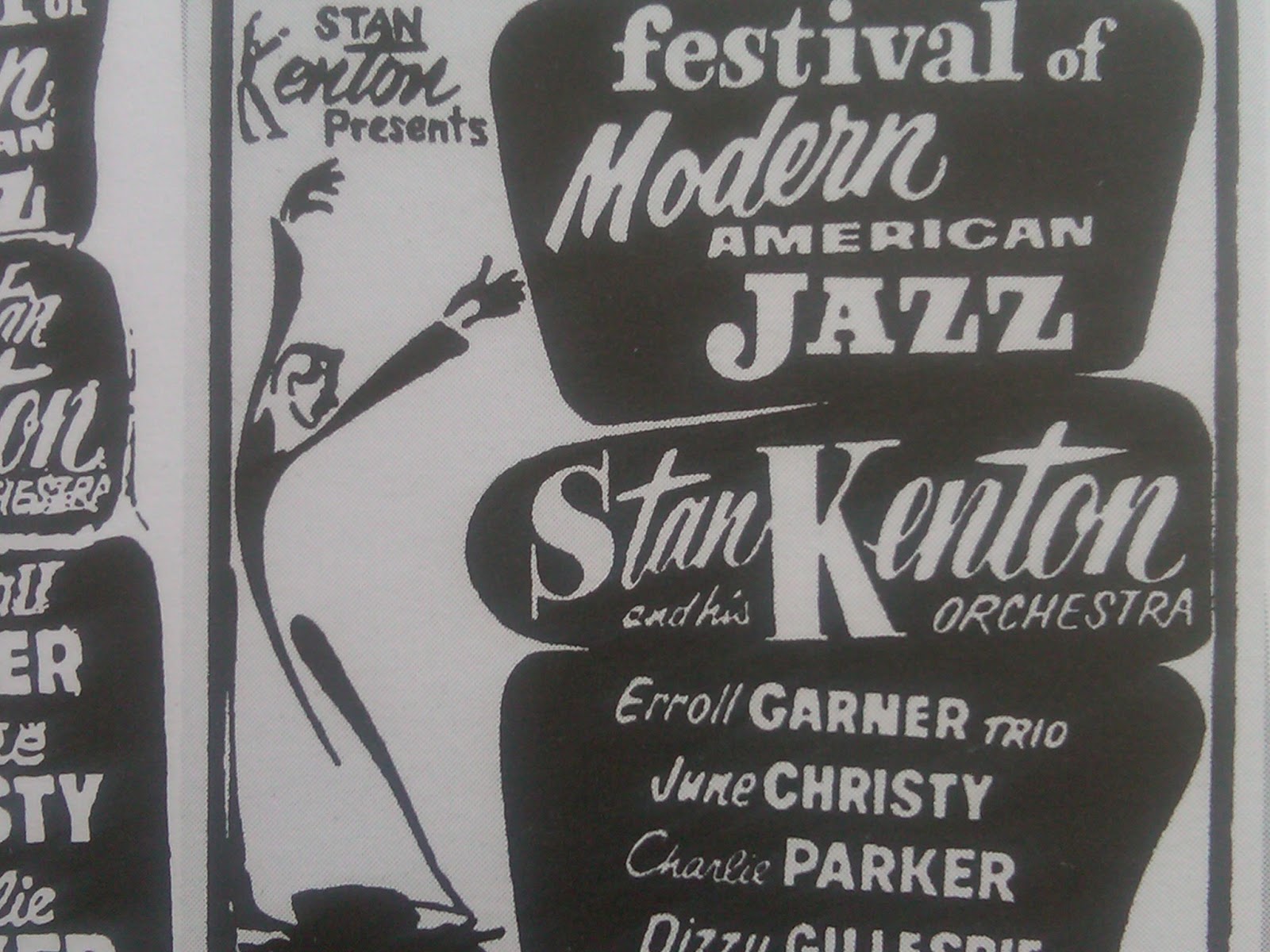

In his column, “Backstage with James Lee,” the Worcester Evening Gazette reporter noted, “Al Wilde, promoting the Stan Kenton Jazz Festival at the Auditorium next Tuesday, sends word Kenton will play no other New England city on this tour. He comes here from Pennsylvania and pops out the next day for White Plains, NY.

“For the real aficionados, here are the musicians who’ll be with Kenton: Buddy Childers, Sam Nato, Stu Williamson, Don Smith, Vic Minnichiello, Frank Rosolino, Bob Fitzpatrick, George Roberts, Joe Ciaveridone, Milt Gold, Bill Perkins, Chick Eddy of Milford, Charles Mariano, Dave Schildkraut, Anthony Serina, Stan Levy, Don Bagley, and Bob Lesher.”


Speaking of Parker on the Kenton tour saxophonist Schildkraut said, "Bird was no goof. He was too active, always on the move, always writing tunes. Even when he seemed to be doing nothing, things were getting done .... I had always followed him musically, and this was brought into sharp focus by an incident where the guys on the the trip once complained that I disturbed their sleep by playing in the middle of the night. I denied it but didn't seem to convince anyone. I asked around till Bird told me it was he."
Standing the tallest, Stan Kenton in a Worcester record store
Although there are numerous accounts of the Kenton show, in the way of advertisements, previews, and reviews, there is little mention of Parker in any of the local press. 


Stan Kenton was the headliner and received most of the press. In his column, under the headline of: Kenton’s Vow finally Fulfilled; Draws Big 2500 to Auditorium, Lee wrote: “Here’s the big news of the week: Stan Kenton and his orchestra finally clicked at the box office in Worcester.

Interior of Worcester Memorial Auditorium
“Tuesday night’s Jazz Festival at the Auditorium drew 2500 customers, a fancy turnout indeed, and with a top price of $3.50, that gave Stanislaus a substantial gross and a neat profit. For several years, Stan and his progressive jazz flopped all over the place when he played Worcester. Those who attended were almost fanatical in their adoration of the music but, there weren’t anywhere near enough of them.


Stan Kenton at the piano

“After one of these dates Stan announced he’d never appear in the city again. Then he changed his mind and vowed he’d keep coming here until he was successful. Well, he finally did it. True it was a profitable crowd a few years ago when he came here with the Big Show, but considering the other big names on the stage that couldn’t be credited entirely to the band.


“But Tuesday night it could. Dizzy Gillespie, Erroll Garner, and the rest were great, but Kenton obviously was the magnet that brought the crowds through the Auditorium doors.”

In addition to a review of the show, the intrepid columnist also dished some behind-the-scenes activities as well. He mentioned that after the concert, Kenton and his manager George Morte of Milford, singer June Christy (who appeared at the club the previous month), and a raft of musicians celebrated the success at the Holiday Club in Leominster. The venue was owned and operated by Morte and former Kenton saxophonist Boots Mussulli.

George Morte

Mussulli, who also hailed from Milford, was a close personal friend of Parker. Stories of Bird playing the Crystal Room in the Southern Worcester County town still abound in these parts. It’s also well known that Parker loved Mrs. Mussulli’s Italian cooking.

Mussulli, Kenton and Leo Curran


Lee also reported that the entire musical entourage afterwards returned to Worcester to close the El Morocco, which was famous for its late night revelry. The restaurant, a reported favorite of Kenton and countless other musicians was owned by the Aboody family.

Speaking of Aboody, in another feature on the Auditorium show, Lee wrote, “The Worcester Stan Kenton Club was out in force Tuesday night, led by its officers, Joe Aboody and Henry Vito. The 60 members occupied two special rows of seats down front, each one wearing a big badge containing the maestro’s picture. Stan got a kick out of it.
Joe Aboody at the El

“Kenton was a pretty happy guy when he left Worcester yesterday afternoon for White Plains, NY. He said he’ll be back here next season with another Jazz Festival,” Lee said.

The question is: Where is Bird in this picture? Who did he play with at the show? Where did he go afterwards? Did he stay in town? Did he have friends here?

Bird in flight in 1954

This is what we know of Parker’s whereabouts during this time. In most of February in 1954, he was busy touring with the Festival of Modern American Jazz. The package took him up and down the east coast from Worcester to Atlanta, parts of the north in the cities of Toronto, Detroit and Chicago, through the south from Nashville to New Orleans, and out west from Seattle to Los Angeles.  

In an interview with Stan Levey (former Kenton and Parker drummer), he recalls that Bird was ill at the time. He also notes that the saxophonist played with Dizzy Gillespie on the tour. See:


Parker joined the tour on Thursday, January 28, 1954. Just prior to that, he played a week engagement at the Hi-Hat Club in Boston. Three of the nights were recorded and have been released in a variety of packaging. A recent reissue by Blue Note, called, Bird at the Hi-Hat finds the saxophonist supported by Boston musicians, trumpeter Herbie Williams, pianist Roland Griffith, bassist Jimmy Woode, and drummer Marquis Foster.


Bird and band at the Hi-Hat. Hear sound clip at: http://www.youtube.com/watch?v=aVUq4R9WvH0

Whether Bird hired this lineup for his Kenton tour is not known. It should be noted that there is a private recording of Parker playing with the Kenton band from the Festival of Modern American Jazz live at Civic Auditorium in Portland, Oregon.

Here’s what the Kenton band sounded like in 1954 -- http://www.youtube.com/watch?v=6VdFikUS1T4

Directly following the tour, Parker worked with the Joe Rontoni Trio at the Tiffany Club in Los Angeles.          

So, again, where was Parker in Worcester? In the liner notes to the Uptown Records release titled, Charlie Parker Boston 1952, writer Bob Blumenthal asserts that on February 9, 1954, Bird played at the Knights of Columbus Hall on Elm Street in Worcester. “Boots Mussulli organized this Sunday afternoon jazz session that featured Parker’s group (with Joe Gordon) alternating with Mussulli’s group," he said.

Former Elks Lodge on Elm Street, torn down in the mid-'50s 
Trumpeter Joe Gordon
This is the same day of the Auditorium concert, whether it was before or after the show is not known. As far as the Knights of Columbus Hall, there was no such establishment. It could have been the Elks Lodge that was located on Elm Street.

In the 35-page booklet, produced by Dr. Robert Sunenblick, he states Parker worked throughout the Commonwealth including at least one other time in Worcester. In 1951, Bird did a five-city tour of the state with the incredible lineup of baritone saxophonist Serge Chaloff, pianist Nat Pierce, bassist Jack Lawlor and drummer Joe MacDonald. “Coming off this tour,” Sunenblick said, “Joe MacDonald drove Parker to Christy’s in Framingham, Mass., where three of the four tracks issued on The Happy Bird LP on Parker Records were recorded.”

Sound clip here: http://www.youtube.com/watch?v=gtGVC4sPxRw

MacDonald remembered Wardell Gray coming out to Christy’s with Howard McGee, who was appearing at the Hi-Hat in Boston with the Oscar Pettiford Sextet.

The tour was booked by Mussulli and said to have stopped at Storrs, Conn., Northampton, Holyoke, Springfield, and a Worcester show with no information included. There is no record of Charlie Parker's appearance in this city. I spoke to a collection of musicians and jazz fans around at that time, who said if he was here they would have known it. The theory is that the show was cancelled. In Ken Vail's book, Bird's Diary; the Life of Charlie Parker 1945-1955, the author places the saxophonist at Christy's in Framingham on Thursday, April 12, 1951. The day before he had closed at Birdland. The day after, Parker was back in New York playing at the Apollo Theater. However there are open dates scattered throughout the April calender that year, but Vail cites none of the five Massachusetts shows in question.  


Dave McKenna
In the spring of 1952, Parker played at a neighborhood bar called McCann’s at 129 Pleasant Street in Leominster.“Parker appeared here for Sunday afternoon jam session playing his white plastic alto sax,” Blumenthal said. The personnel with Parker were listed as pianist Dave McKenna, bassist Dick Whetmore and drummer Jimmy Wyner. 


Both shots of McCann's Cafe by Kastellano's, courtesy of the Leominster Historical Society
Other local Parker dates include possibly two others at the Cyrstal Room in Milford, possibly in 1952 and '53. The band for at least once of the shows included McKenna and Worcester trumpeter Emil Haddad.

Whether or not the Charlie Parker appearances in Worcester become fully documented is yet to be determined. What is certain is the fact that his musical impact was enormous and enduring. His influence on musicians -- both of his generation and beyond -- continue to be felt in Central New England and around the world. Parker died one year after the Auditorium appearance on March 12, 1955. He was 34.


*Note: This is a work in progress. Comments, corrections, and suggestions are always welcome at: walnutharmonicas@gmail.com. Thank you. Please check out my blog on Worcester songwriters at: www.worcestersongs.blogspot.com

Resources

Yardbird Suite: A Compendium of the Music and Life of Charlie Parker


Lee Konitz talking about the Kenton tour with Bird
http://www.youtube.com/watch?v=AQasBBGbttY


Saturday, July 6, 2013

Live at the El

By David "Chet" Williamson Sneade 

The original El Morocco on Wall Street
To say it was a legendary place would only reduce it to a cliché. It was more than that. It was a dream.

For the many musicians who worked the room and the fans who witnessed their artistry in action, it was a jazz Mecca personified. The dream not only lives in the collective memory of all involved, fortunately, many of the nights have been captured through the magic of recording. Some have been released commercially, some in the form of bootleg tapes, and still others in private collections only shared among the fortunate few.

The new building, when it was relocated across the street from the original

The intent of this piece is to shed some light on what’s been documented out there, explore the sound, and dig up the many layers of pavement on old memory lane.

The earliest recording is one of the finest. Recorded live at the El in 1980, it’s called Herb Pomeroy: Pramlatta’s Hips. It was produced by longtime Boston radio host Ron Della Chiesa for the Shiah label.

Marc Myers, a regular contributor to the Wall Street Journal and author of Why Jazz Happened, has written widely on the subject.

What’s in a name? He asked trombonist Hal Crook, the composer of the piece, “Pramlatta’s Hips.” "If I recall, back in the mid-1970s, I was reading a book written by a yogi and there was a story in it about this beautiful Indian woman named Pramlatta who seduced men and drove them mad with her hips. This suggested to me the sound of the music I had just written for Herb's band. So I called the song Pramlatta's Hips.”


When asked about the woman on the album jacket, Crook said, "I think the drawing on the cover may be of Betty [Loftin], a jazz singer from Georgia and Herb's wife at the time. She's the Betty from Benny Golson's tune, 'Along Came Betty.' When Pramlatta's Hips came out, everyone was very surprised by the cover. It was totally unexpected. Some loved it, some hated it. Sadly, Betty later died, and I remember everyone was shaken by her passing." 

Unfortunately, as of this writing, the album is still not yet released on CD. For more go here: http://www.jazzwax.com/2011/10/herb-pomeroy-pramlattas-hips.html

Another historic recording is The Count Basie Orchestra Live at El Morocco (under the direction of Frank Foster). Originally released on vinyl by the Telarc label, it is now available on CD through the Concord Music Group.

Recorded in the “Green Room” at the El on two nights, February 20-21, 1992, the album came out in June of that year. In addition to many of the hits from the Basie band book including, “Corner Pocket,” “Shiny Stocking,” and “One O’Clock Jump,” the repertoire includes a tune originally titled, “Easy As It Goes,” now renamed “A Night at the El Morocco,” in dedication to the Worcester venue. It was written by Melton Mutasfa, the trumpeter on the date, and like Dizzy Gillespie’s “Groovin’ High,” it was based on the standard, “Whispering.”

According to the liner notes, written by Don Elfman, the piece is a “tribute to the setting and to the graciousness of the Aboody family.” Special thanks also went out to Mary Mardirosian of WICN-FM “for her support and encouragement.”


Jazz radio host, Mary Mardirosian


For a sound sample of the tune go here:  http://www.myspace.com/music/player?sid=50808527&ac=now

Also see: “Corner Pocket:”


* Note: Saxophonist Boots Mussulli also wrote a tune for the room. It’s called “El Morocco” and can be found on his Capitol release, Little Big Man. 

Another commercially available CD is Jim Porcella and the Jeff Holmes Big Band release, You’ve Got That Look! with special guest Dick Johnson Live at the El Morocco. Recorded in 1994 by Signature Sound, the disc features a dozen tunes including two written by Porcella and the title track by Holmes. 


Saxophonist Dick Johnson on soprano
In his liner notes Fred Bouchard said: “Man-with-a-horn-about-town Dick Johnson is a natural guest of honors (alto spots smoke ‘Georgia’ and ‘Teach Me,’ clarinet lifts off ‘S Wonderful) for his reed magic and bandsmanship…. A final element in this ethereal equation is the El Morocco audience; two generations have clamored at the pointy doors overlooking Worcester for the baba ganoosh and big band push.”   

For sound samples of the disc go here: http://www.cdbaby.com/cd/porcella1

Vocalist, former radio programmer, and TV host, Toni Ballard captured a collection of live performances that were recorded at variety of venues throughout the city. They were presented on her outstanding program, "Studio 3." Three were taped at the El Morocco. They include:


Amy Rome w/bassist Ray Appleman


To see a Ballard report on the restaurant, go here: http://www.youtube.com/watch?v=fxuPnSP61iY

For many years radio station WCUW 91.3 FM at 910 Main Street presented live jazz shows in Worcester


Best known for offering cutting edge artists such as Archie Shepp, Max Roach, and Jaki Byard at venues such as the New England Repertory Theatre, the Worcester Artist Group, and the planetarium at the Ecotarium, for a couple of years they produced shows at the El as well, including:  


Kenny Werner

Marty Ehrlich

Saxophonist Bob Mover
A spate of private recordings was also captured at the El. Here is one of the best:  

Bob Mover –

A couple of bootlegs have been passed around by collectors over the years. They include: Charlie Rouse with special guest Emil Haddad on trumpet and the Mike Metheny Quartet.

Videos

Some notable videos also are circulating recently on facebook, including the Rebecca Parris Quartet with special guest Emil Haddad.


Rebecca Parris


As mentioned, the El Morocco was a dream. 

Here is a partial list (in no particular order) of other performers who made it so dreamlike.

(In the Nile Room)


  • Freddie Hubbard
  • Eddie “Lockjaw” Davis and Harry “Sweets” Edison
  • Makoto Ozone
  • Bobby Shew
  • Chet Baker
  • Joe Turner
  • Roomful of Blues
  • Ahmad Jamal ...                                                                             


Scott Hamilton/Warren Vache in the Nile Room at the El

  • Ruby Braff
  • Dick Johnson
  • Philly Joe Jones
  • Red Rodney
  • Etta Jones and Houston Person
  • Jerry Bergonzi – Con Brio
  • Richard Carr Pro Bow Trio
  • Shorty Rogers
  • Scott Hamilton
  • John Pizzarelli
  • Richie Cole
  • Mark Murphy
  • Chris Neville
  • Art Farmer
  • Warren Vache
  • Mike Turk
  • Joanne Brackeen

Gray Sargent, Emil Haddad and Dave McKenna in the Green Room at the El
In the Green Room


  • The Buddy Rich Band
  • The Count Basie Orchestra, under the direction of Frank Foster
  • Dave McKenna, Donna Byrne, Gray Sargent and Marshall Wood


*Note: This is a work in progress. Comments, corrections, and suggestions are always welcome at: walnutharmonicas@gmail.com. Also see: www.worcestersongs.blogspot.com. Thank you.


Resources


Sunday, June 23, 2013

The Plymouth and its pilgrims

By David "Chet" Williamson Sneade

In the early days of jazz, long before the music was codified and taught in academia, the magical mysteries of the music were -- as the old-timers would say – “learned on the bandstand.”

A collection of Saxtrum Club's founding members with Jaki Byard at far right, front row 

Mentoring was the key to the highway. Up and coming players gathered information heard on radio, recordings, books, and from other practitioners. Role models were where you found them.

To rub elbows with professionals was rare, especially of the touring kind. To play with the jazz stars of the day was virtually unheard of -- unless of course you were fortunate enough to find them at an after-hours jam session.

Barney Price singing with saxophonists Guido Grandpietro and Howie Jefferson

Here in Central New England, the musicians of the “Greatest Generation” -- those born in the Depression and fought in WWII -- created a local venue that attracted some of best and brightest players of the day.

It was called the Saxtrum Club, a musician’s cooperative located in the Laurel/Clayton neighborhood. The Plymouth Theater (now called the Palladium) at 261 Main Street was its wellspring.


Plymouth interior

The great pianist Jaki Byard was one of the club’s founders. In an interview with Len Lyons for his book, The Great Pianists, Byard said, “It was a private club organized by a few of us musicians. We used to jam and hold rehearsals there. The jam sessions were usually started after midnight.
Young Jaki

“There was a nearby theater where the big names played, and they used to come in to jam with us: Joe Venuti, Basie, the members of Stan Kenton’s early orchestra. I was sixteen, and I guess I originated the name, Saxtrum, for sax, trumpet, and drums. I was playing trumpet at the time with a local band led by Howie Jefferson.”


Young Barney Price

Young Howie Jefferson


In Worcester jazz lore, tales  of legendary figures such as Roy Eldridge, Chu Berry, Herschel Evans, Gene Krupa, and a young singer named Frank Sinatra burned the midnight oil at the club in jam sessions that still conjure tales for the ages. This, of course, was after completing their public performance at the Plymouth.

Plymouth Lobby

In 1941 alone, Basie, Venuti, as well as Cab Calloway, Fats Waller, Ina Ray Hutton, Charlie Barnet, Louie Prima, and the Ink Spots headlined the Plymouth’s marquee. 

Local musicians to benefit from such nights eventually became national players themselves -- Byard, Barbara Carroll, Don Asher, Bobby Holt, Murray Guarlnick, Paul Kokunen, Ockie Menard, Lou Mercuri  and Don Fagerquist, just to name a few --  not to mention local heroes like Emil Haddad, Eddy Shamgochian, Rockie Blunt, and co-founders Howie Jefferson and Barney Price, who were presented with travel opportunities, but opted to stay home.   

The impact, influence, and inspiration drawn from these musical encounters were immeasurable. In a 1969 interview with writer Ev Skehan, saxophonist Howie Jefferson said, “I remember Sam Donahue comin’ into the club and sittin’ in his tenor case and wailin’ right through about 20 choruses of ‘Indiana’ without ever comin’ up for air. Main, that cat could blow.”

The dates of these exchanges are difficult to pin down. The Saxtrum Club dates roughly from 1938 to some time in the war years. In the years that the club was open, virtually every name act and big band on the touring circuit played Worcester. Unfortunately, most of the Saxtrum's more than 100 members are now gone. 


In addition to those mentioned, other club members include: Ralph Briscott, Dick Murray, Harold Black, Jude Wade, Dave Robertson, Dick Adshead, Joe Ferrazano, Tony Finelli, Phil Scott, Bill Toney, Kenny Proctor, Eddie Dolbare, Al Mercury, Billy Halbeck, Hal Drelinger, Eddie Temple, Benny Hurwitz, Franny O’Connor, Moe Batchelder, Lou Levine, Mary Conlin, and Bert Hardin. Other musicians active in that period who may have jammed at the club were Eddie Dolbare, Luke Myers, Pete and Alice Price, Morgan Sorrell, Tony Mandel, Rod Ford, Miff George and Gretchen Morrow.  


Another regular at the Saxtrum was Al Hirt. “Old Jumbo was stationed up at Fort Devens,” Jefferson said. “It got so he was at the club every Saturday night.”

Al "Jumbo" Hirt
These names represent the deepest bench of jazz musicians Worcester has ever offered. The historic Plymouth Theater, built in the late 1920s, was a 3,000-seat venue situated on the corner of Main and Central streets. The Saxtrum Club was located in a storefront on the corner of Glenn and Clayton Street (Plumley Village today), less than a mile away.

In the early 1940s, the Plymouth would showcase acts for three nights. “Tuesdays nights they tore the roof off the Saxtrum Club, Skehan said. "The name bands would arrive in Worcester on Monday for a three-day engagement at the Plymouth. Having traveled many miles by bus or car, they’d all fall into the Saxtrum as soon as their gig was over at the Plymouth

"They’d play until the early hours of the morning, challenging the local musicians with new ideas and sounds. Then, on Wednesday night, the band would finish at the Plymouth and be back on the road. It was a ritual each musician looked forward to whenever he came to Worcester.”


According to Skehan, out of these sessions the Saxtrum Club’s reputation spread far beyond the confines of Worcester, drawing national attention. “Musicians from all over the country knew that here was a place where jazz men got together to exchange ideas, to create, to “carve” each other, and to help each other. They loved it. The freedom of expression and impromptu jazz sessions that typified the Saxtrum Club spread quickly through the area. Before long musicians were beating a path to the club’s door.”


Skehan also contends that at the same time that the Saxtrum Club “really began to swing, the big-name bands were appearing at the Plymouth Theater.” He lists such national acts as Tommy Reynolds, Scat Davis, Gene Krupa, Chu Berry, Carl Hoff, Roy Eldridge, Anita O’Day, Cozy Cole, Cab Calloway, Sam Donahue, Charlie Ventura, and many others made frequent visits to the club and “sat in” with the local musicians.”

Other names rumored to make the trek from the Plymouth to the Saxtrum include Hershel Evans, Lucky Millender, Fats Waller, Charlie Ventura, Anita O’Day, and Don Byas -- all conceivable given their documented Worcester public appearances at the time. 


As the war raged in Europe, more and more young Worcester musicians laid down their instruments and picked up arms to join the fight.   

“In the early 1940s many of the local musicians went into the armed forces,” Skehan wrote. “This was the end of the Saxtrum Club. Although the few members who stayed out of the service tried to keep the club alive, things just weren’t the same. Funds soon ran out and the club was abandoned.”


Through name changes, a variety of owners, and its recent dodging of the wrecking ball, the Plymouth Theater continued to stage national acts. Although nary a jazz musician graces the bill today, every starlit evening the ghosts of yesterday make a bee-line to the corner of Glenn and Clayton streets to wake up the dawn with music.